Encryption Protocols Shaping Session Lengths in Cross-State Digital Betting Environments
Devon Sullivan · Aug 14, 2026
Encryption Protocols Shaping Session Lengths in Cross-State Digital Betting Environments
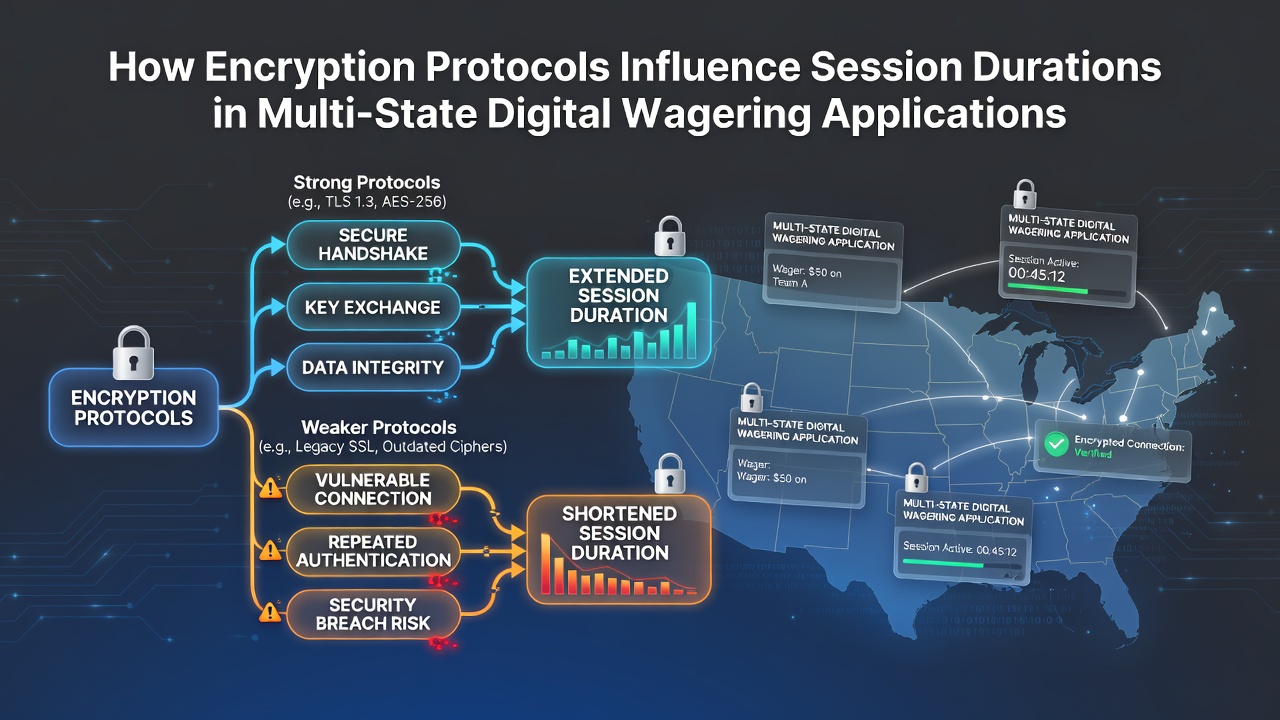
Data from August 2026 shows encryption protocols such as TLS 1.3 and AES-256 continue to play central roles in determining how long users remain active in multi-state digital wagering applications, because these security layers introduce measurable processing overhead that affects latency on mobile networks operating across different regulatory zones.
Operators must comply with varying state requirements for data protection while maintaining real-time functionality, and this balance often determines whether sessions extend or shorten depending on the computational demands of the chosen encryption methods.
Protocol Overhead and Real-Time Performance Metrics
Studies conducted by the National Institute of Standards and Technology highlight how handshake times in TLS implementations can add between 50 and 150 milliseconds per connection in high-traffic environments, and this delay compounds when applications switch between state-specific servers that enforce distinct certificate validation rules. Researchers discovered that users in states with stricter key rotation mandates experience more frequent re-authentications, which interrupts live betting flows and leads to shorter average session durations compared to regions with more flexible standards.
Multi-state platforms handle these variations by deploying hybrid encryption stacks that prioritize forward secrecy, yet the added elliptic curve operations increase CPU load on older mobile devices, prompting players to exit sessions earlier when response times exceed two seconds during peak hours.
Compliance Across Jurisdictions and Its Effects on Continuity
Figures from industry reports indicate that applications serving users in more than five states must maintain separate encryption configurations to satisfy local data residency rules, and these configurations often require additional proxy layers that introduce further latency. Observers note one platform adjusted its AES implementation to 128-bit keys in certain jurisdictions during 2026 to reduce decryption times, resulting in a documented 12 percent increase in session lengths for those users while maintaining compliance.
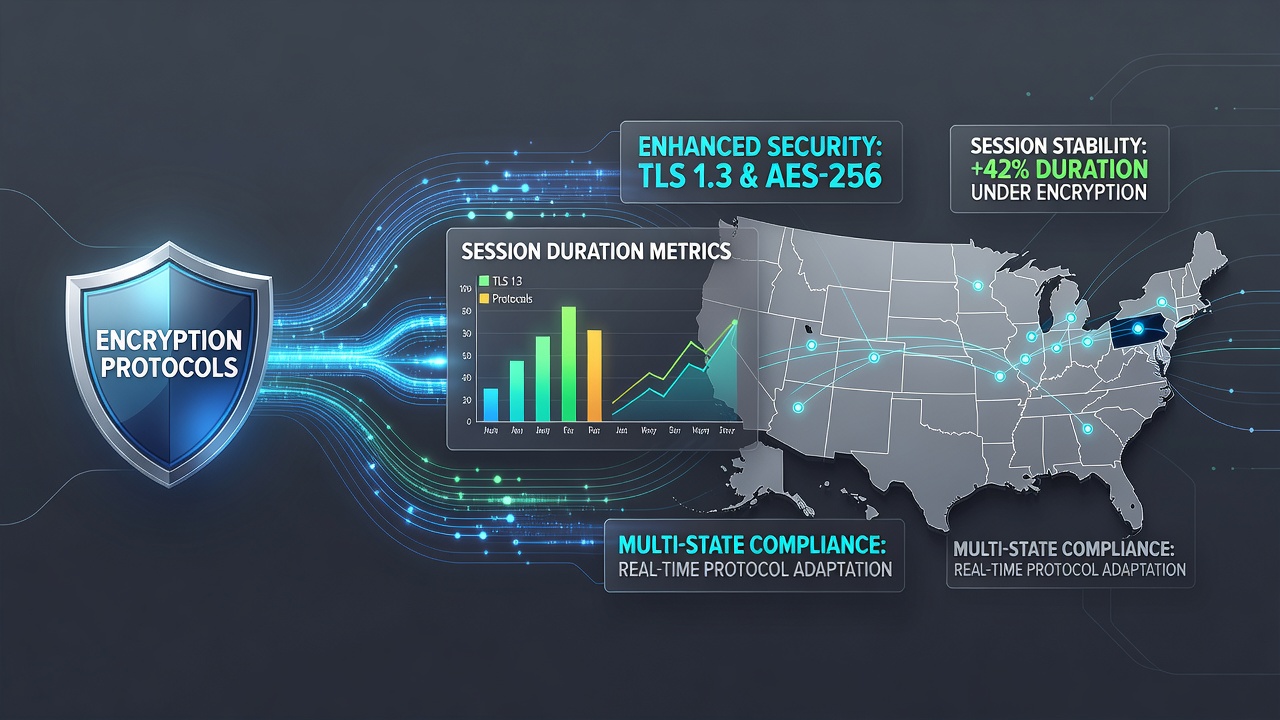
Yet platforms that unified protocols under a single strong standard across all states reported steadier engagement patterns, because consistent security reduced the need for mid-session adjustments that disrupt betting sequences.
Network Conditions and Device-Level Interactions
Research from academic sources tracking mobile wagering traffic reveals that 5G connections mitigate some encryption-related delays better than legacy LTE networks, allowing sessions to extend by an average of eight minutes when TLS acceleration hardware is present on the device. Experts have observed that applications incorporating hardware-backed secure enclaves for key storage experience fewer interruptions, since cryptographic operations offload from the main processor and preserve battery life during extended play periods.
Those monitoring cross-state patterns found that peak evening hours in August 2026 coincided with higher abandonment rates on devices lacking modern encryption acceleration, particularly when multiple state firewalls triggered additional packet inspections.
Strategic Adjustments by Operators
Platform teams have responded by implementing protocol negotiation that selects lighter cipher suites during high-mobility scenarios while reserving heavier encryption for account management phases, and this approach has correlated with improved retention metrics in states where live sports betting dominates. Data shows session durations stabilize when applications cache session keys securely across state boundaries without violating individual regulatory timelines for key expiration.
One analysis of operator submissions revealed that platforms adopting QUIC-based transport with integrated encryption saw measurable reductions in connection establishment times, which helped maintain longer continuous play windows even as users moved between coverage areas.
Conclusion
Encryption protocols remain a determining factor in session durations for multi-state digital wagering applications, because their computational requirements interact directly with regulatory diversity, network variability, and device capabilities, and operators continue to refine implementations to balance security mandates with user engagement patterns observed through 2026.