Display Dimensions and Their Effects on Reaction Windows in Global Multiplayer Table Game Networks
Nils Reed · Aug 2, 2026
Display Dimensions and Their Effects on Reaction Windows in Global Multiplayer Table Game Networks
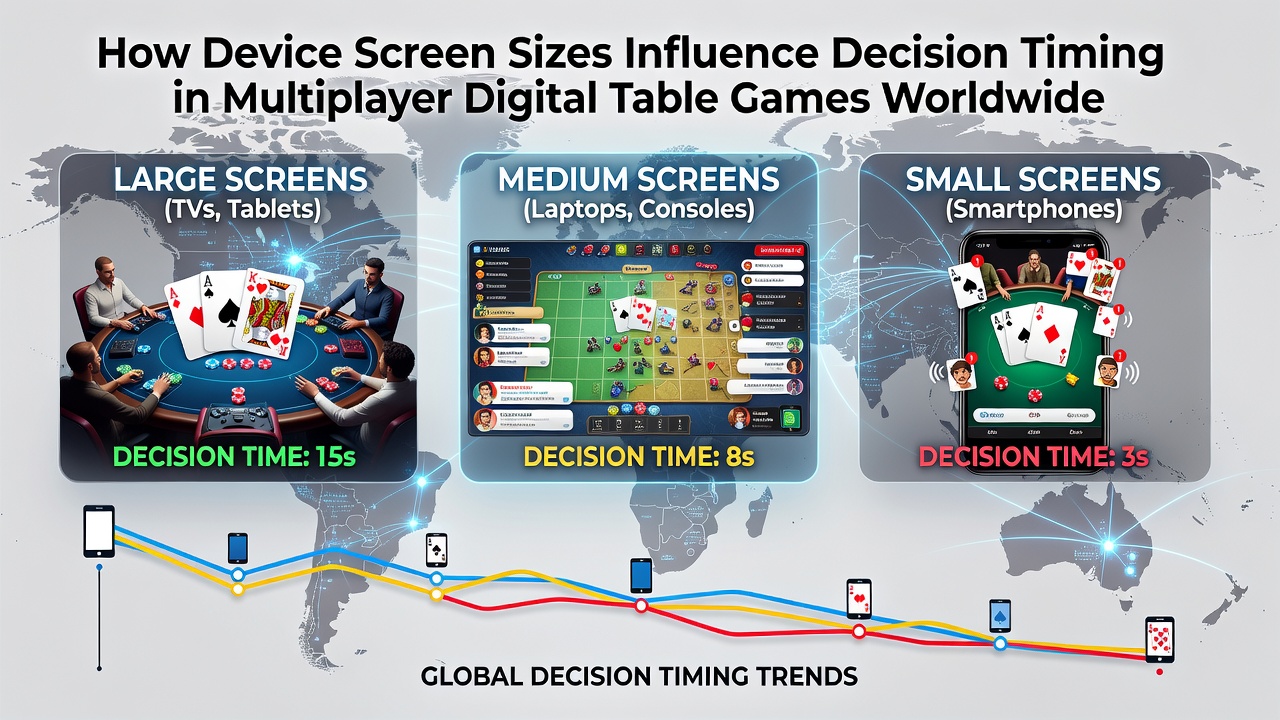
Device screen sizes create measurable differences in how participants approach turn-based choices during multiplayer digital table games that span poker variants, strategy boards, and card competitions hosted on international servers. Research indicates that larger displays provide expanded visual fields for tracking multiple data points such as opponent histories, pot sizes, and remaining timers while smaller formats compress those elements into condensed views that alter processing sequences. Observers note these variations appear consistently across regions from North America to East Asia during peak evening hours when simultaneous sessions peak.
Data collected through platform analytics shows that desktop users averaging 24-inch monitors register average decision intervals of 12.4 seconds per turn in standard Texas Hold'em lobbies whereas smartphone participants on 6-inch screens average 8.7 seconds. The pattern holds in August 2026 metrics released by several network operators that track latency alongside device metadata. Those who've examined the logs point to reduced scrolling requirements on bigger screens allowing simultaneous monitoring of chat logs and betting patterns without menu switches.
Regional Patterns in Device Usage and Timing Data
North American markets demonstrate higher desktop retention during evening tournaments with players favoring larger monitors that display full board states plus side panels for statistics. European sessions reveal mixed tablet usage where 10-inch screens bridge the gap between mobile speed and desktop clarity leading to intermediate timing figures around 10.2 seconds. Asian operators report elevated mobile participation tied to commuting patterns and compact interfaces that prioritize quick-tap actions over detailed review.
Studies from academic teams at institutions including the University of Nevada Reno have examined these correlations through controlled experiments involving cross-device participant groups. Findings reveal that screen real estate directly influences information hierarchy with larger formats supporting deeper analysis before commitment while compact views encourage heuristic-based selections. American Gaming Association reports further document how these device-driven timing shifts scale across millions of monthly active accounts worldwide.
Interface Adaptations and Decision Load
Game developers adjust layouts according to detected screen parameters with auto-scaling algorithms that reposition timers, card spreads, and action buttons. On smaller displays the primary action zone occupies a larger relative percentage of available pixels which reduces finger travel distance yet limits peripheral awareness of secondary indicators like fold rates or player notes. Larger screens distribute elements across wider areas requiring more eye movement but enabling parallel processing of multiple information streams.
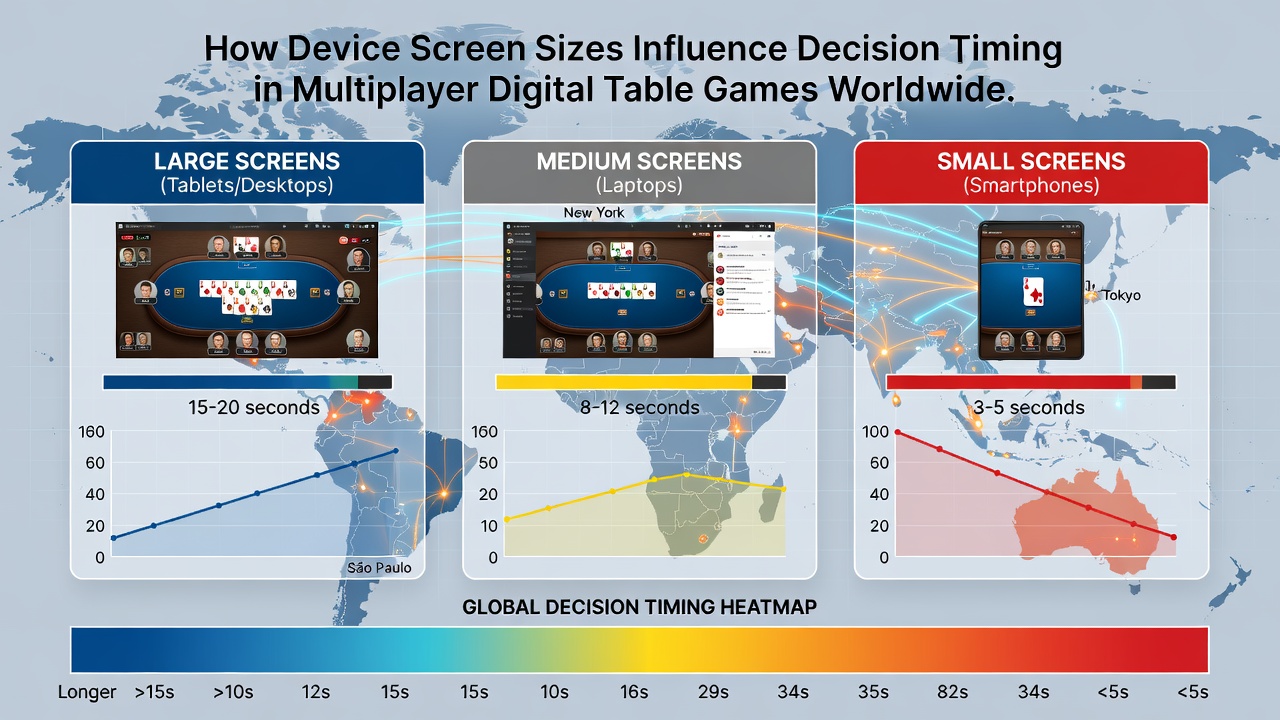
Platform logs from August 2026 indicate that cross-device players switching mid-session experience temporary timing adjustments as they adapt to new visual densities. Those monitoring session data across time zones observe that mobile-heavy regions show compressed decision distributions concentrated toward the lower end of allotted timers while desktop-dominant lobbies spread choices more evenly across the full window.
Technical Factors Influencing Response Windows
Refresh rates and touch response latencies interact with screen size to shape overall decision flow. High-resolution large displays paired wth stable connections support smoother animations that keep contextual information visible throughout the decision phase. Mobile environments introduce additional variables including variable network conditions and battery optimization modes that can delay rendering of updated board states.
Industry organizations such as the Canadian Gaming Association have compiled comparative datasets showing how these hardware interactions produce consistent regional signatures in timing statistics. Participants on mid-sized tablets often land between the two extremes creating hybrid patterns where quick selections occur for routine actions while complex multi-step choices extend closer to desktop averages.
Conclusion
Screen size emerges as a structural variable that shapes decision timing distributions across worldwide multiplayer digital table game environments. Platform metrics and academic examinations continue to map these relationships as device ecosystems evolve and new form factors enter circulation. The resulting data supports targeted interface refinements that align visual presentation with observed behavioral patterns in different markets.