Currency Fluctuations Redefining Bonus Architectures in International Online Casino Ecosystems
Nils Reed · Aug 11, 2026

Currency Fluctuations Redefining Bonus Architectures in International Online Casino Ecosystems
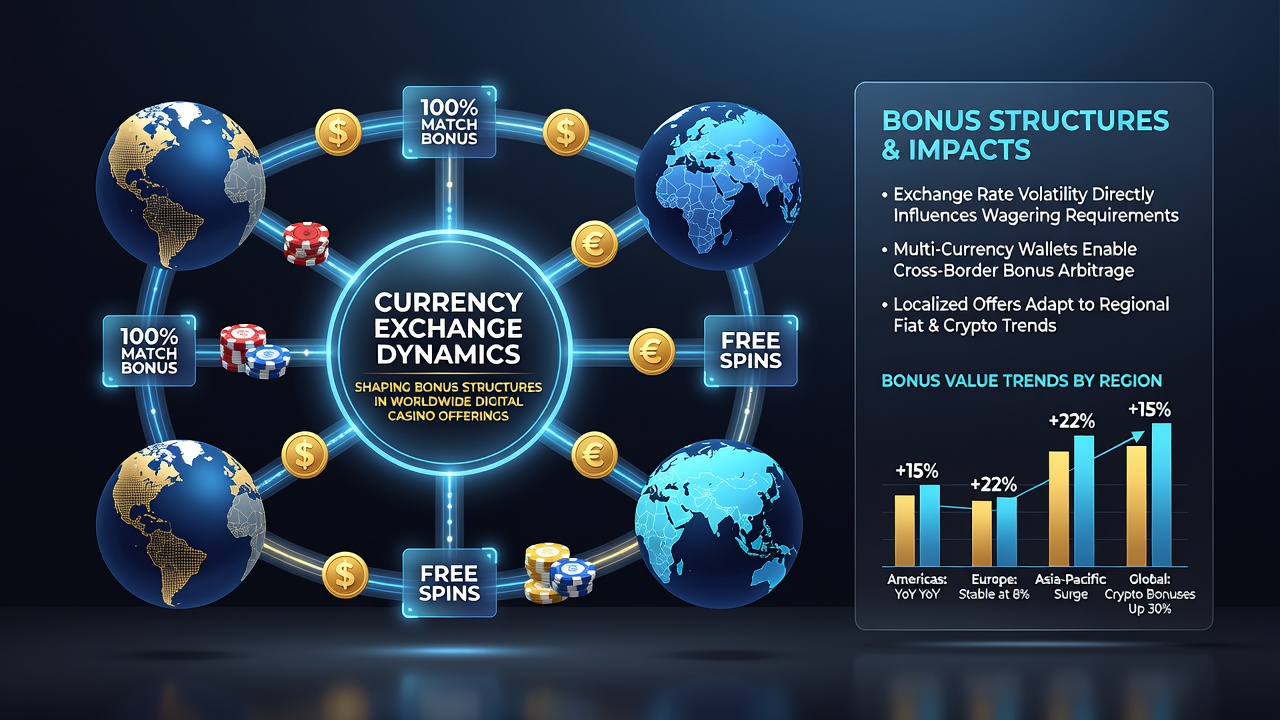
Exchange rate movements have become central to how operators structure promotional incentives across digital casino platforms that operate in multiple jurisdictions, and data from mid-2026 shows operators adjusting bonus percentages and wagering requirements in response to shifts between major currencies such as the US dollar, euro, and Japanese yen. Platforms serving players in regions with volatile local currencies often recalculate bonus values daily, which maintains consistent real-world value even as exchange rates fluctuate by several percentage points within a single week.
Mechanics of Currency Conversion in Bonus Design
Operators convert bonus amounts into base currencies at the start of each promotional period, then apply hedging strategies that lock in rates for fixed intervals so players receive predictable rewards regardless of short-term market swings. When the euro strengthens against the dollar, European-focused sites frequently increase bonus caps to offset the reduced purchasing power for international users, whereas platforms anchored in USD markets tend to hold bonus values steady and instead modify withdrawal thresholds to account for conversion fees. These adjustments appear in the fine print of terms that specify the exchange rate source, usually a mid-market rate published by recognized financial data providers at the moment of bonus activation.
Multi-currency wallets add another layer because players can fund accounts in one currency and receive bonuses denominated in another, which forces operators to apply conversion spreads that cover both banking costs and risk exposure. Research from industry analysts indicates that platforms offering automatic conversion at deposit time experience higher player retention in markets where local currencies depreciate rapidly, since users avoid surprise reductions in bonus value upon cash-out.
Regional Patterns Emerging in August 2026
Throughout August 2026 operators reported distinct regional responses to currency movements, with Latin American platforms widening bonus eligibility windows during periods of local currency weakness against the dollar to sustain deposit volumes. Asian markets tied to the yen and Australian dollar saw operators introduce tiered bonus structures that scale automatically with exchange rate bands, so a player depositing when the rate sits in one range receives a different percentage match than one depositing after the rate crosses into the next band. European operators, facing relatively stable euro-dollar pairings, focused instead on reducing maximum bonus amounts while extending playthrough requirements to preserve margin when conversion costs rise.
Payment Provider Influence on Promotional Terms
Payment processors that support instant multi-currency settlement have enabled operators to offer bonuses in the player’s native currency without maintaining separate promotional pools for each region, which reduces administrative overhead and allows tighter control over liability. When processors update their settlement rates hourly rather than daily, bonus structures can reflect near-real-time values, and several major platforms adopted this practice during the first half of 2026 after observing increased dispute rates tied to rate lag. Those who studied transaction logs found that disputes dropped measurably once conversion occurred within minutes of bonus claim rather than at the end of a session.
According to figures released by the American Gaming Association, commercial gaming operators handling cross-border traffic noted a measurable uptick in bonus-related support tickets whenever major currency pairs moved more than two percent in a single trading session. The same report highlighted that platforms integrating automated rate feeds experienced fewer compliance issues when regulators examined promotional fairness.
Regulatory Considerations Across Jurisdictions
Regulators in Canada and Australia have begun requesting detailed disclosures of the exchange rate methodologies operators use when advertising bonus values, requiring that any promotional material state the date and source of the rate applied. These requirements emerged after player complaints showed that advertised bonuses in local currency sometimes translated to lower effective amounts once converted at withdrawal. Malta-based licensing authorities, overseeing many international-facing platforms, now include currency risk management plans in their annual compliance reviews, which forces operators to document hedging instruments and rate update frequencies.
Operators that fail to align bonus terms with prevailing rates risk license scrutiny, particularly when marketing materials display figures that become outdated within hours of publication. Data compiled by academic researchers at the University of Nevada, Las Vegas, shows that transparent rate disclosure correlates with lower complaint volumes across regulated markets, which suggests the practice benefits both operators and players when applied consistently.
Conclusion
Currency exchange dynamics continue to influence every layer of bonus architecture in worldwide digital casino offerings, from initial percentage calculations through final withdrawal processing. Operators that integrate real-time rate data, maintain clear hedging policies, and comply with regional disclosure rules position themselves to deliver consistent value while managing financial exposure. As global payment networks expand and more jurisdictions adopt digital currency frameworks, the relationship between exchange rates and promotional structures will likely grow more intricate, requiring ongoing adjustments by platforms and oversight bodies alike.