Biometric Authentication Transforming Security Protocols in Worldwide Digital Gaming Ecosystems
Devon Lorenz · Aug 21, 2026

Biometric Authentication Transforming Security Protocols in Worldwide Digital Gaming Ecosystems
Biometric authentication protocols have integrated fingerprint scanning, facial recognition, and voice analysis into account verification systems across international digital gaming networks, which raises baseline security standards while addressing vulnerabilities that traditional password methods often leave exposed. Data from industry reports indicate these technologies reduce unauthorized access incidents by verifying unique physical traits in real time, and operators in regions like North America and Asia have adopted them to comply with evolving data protection requirements as of August 2026.
Core Mechanisms Driving Protocol Adoption
Multi-factor biometric systems combine physiological data capture with behavioral analytics, which allows platforms to authenticate users during login sequences and transaction approvals without interrupting gameplay flow. Studies conducted by research institutions show that fingerprint and iris recognition achieve match rates above 99 percent in controlled environments, while facial recognition algorithms handle variations in lighting and angles through machine learning refinements that update continuously. Gaming networks operating across borders apply these tools to meet local regulations, and this approach creates consistent verification layers that adapt to different jurisdictional demands.
One platform serving European and Australian markets implemented vein pattern recognition alongside standard biometrics, which strengthened resistance to spoofing attempts that previously targeted simpler facial scans. Observers note that such layered protocols limit account takeovers, since attackers must replicate multiple biological markers simultaneously rather than guessing static credentials. Data indicates these measures have lowered fraud rates in multi-jurisdictional environments where players access shared servers from varying locations.
Regional Variations in Implementation Standards
North American operators prioritize integration with federal guidelines from bodies like the National Institute of Standards and Technology, which outlines performance benchmarks for biometric accuracy and privacy safeguards in consumer applications. In contrast, Asian networks often emphasize speed alongside security, deploying mobile-first solutions that process scans in under two seconds to maintain session continuity during live events. European frameworks stress consent and data minimization, requiring explicit user approval before storing biometric templates on centralized servers.
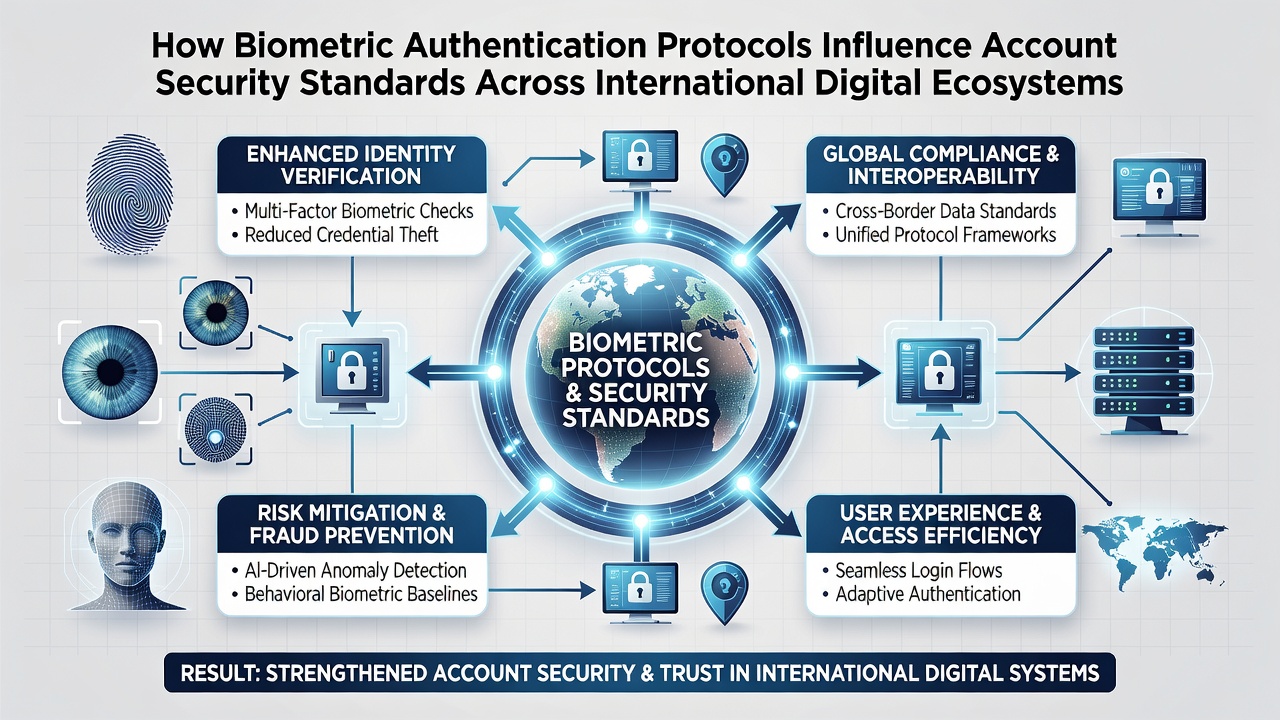
Cross-border gaming networks face additional challenges when reconciling these standards, yet many resolve conflicts by adopting modular systems that toggle features based on user location. Research from university-led projects reveals that unified protocols reduce compliance costs over time, although initial rollout expenses remain higher in jurisdictions with strict audit requirements. Figures from 2026 show accelerated deployment in markets where regulatory updates aligned with biometric advancements during the summer months.
Impact on Broader Account Security Benchmarks
Biometric integration influences password policies by shifting emphasis from frequent changes to periodic re-enrollment of biometric templates, which decreases user fatigue while maintaining protection levels. Account recovery processes now incorporate liveness detection to prevent replay attacks, and this addition has become standard in networks handling high-volume transactions across continents. Industry associations report that platforms adopting these methods experience fewer disputes related to identity theft, since biometric logs provide verifiable timestamps for each access attempt.
Those who've examined breach statistics across gaming sectors find correlations between biometric adoption and reduced credential-stuffing incidents, particularly in environments where players manage multiple accounts simultaneously. Yet challenges persist around template storage security, prompting developers to explore decentralized models that keep data on user devices rather than network servers. Such innovations continue to shape how international standards evolve in response to emerging threats.
Conclusion
Biometric authentication protocols continue to redefine account security standards by embedding physiological verification into daily operations of global digital gaming networks, and this shift produces measurable reductions in unauthorized access while aligning with diverse regulatory landscapes. Ongoing refinements in accuracy and privacy controls suggest further integration across platforms, supported by data from government agencies and research entities that track performance metrics in real-world deployments.